What is 1ᵏ+2ᵏ+⋯+nᵏ? Created by Pavel Klavík
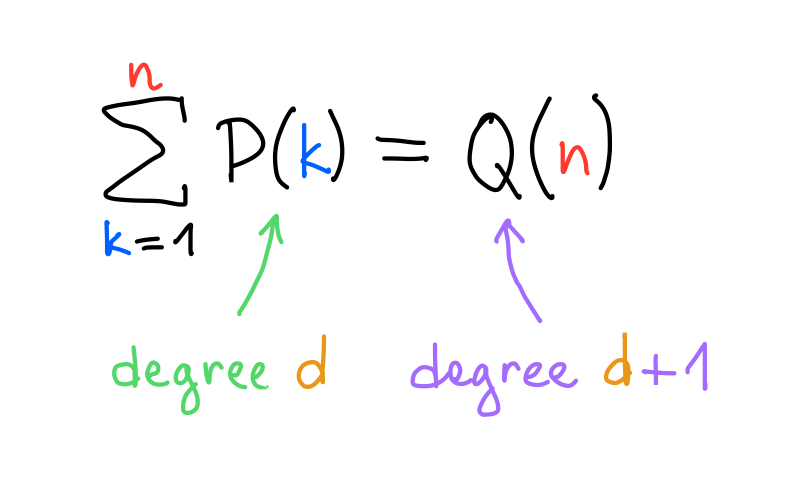
Sums involving integers and their powers were studied for thousands of years. This OrgPage explores the general pattern: a sum of a polynomial of degree d from 1 to n is another polynomial of degree d+1 evaluated at n. An elegant proof hidden within Pascal's triangle is revealed.
Sum of polynomials is a polynomial
Pavel Klavík, PhD founder and CTO
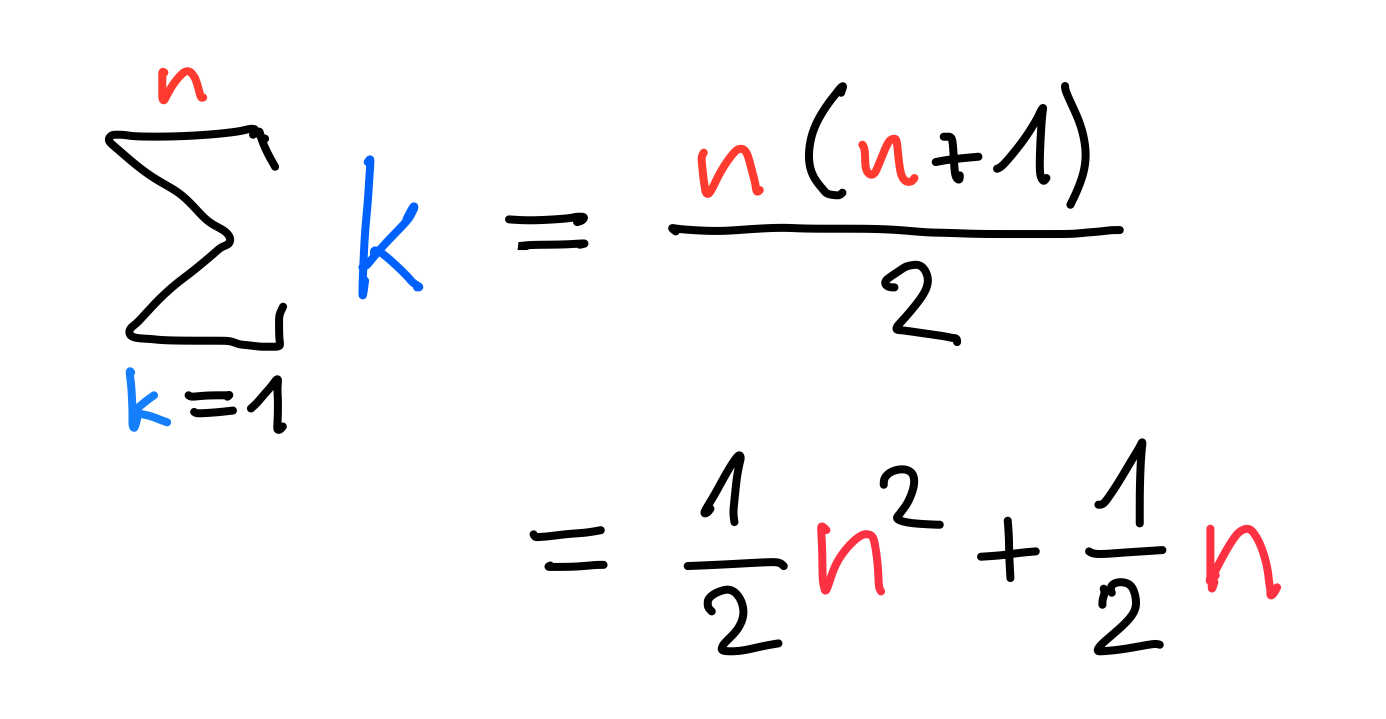
1+2+3+4+⋯+n
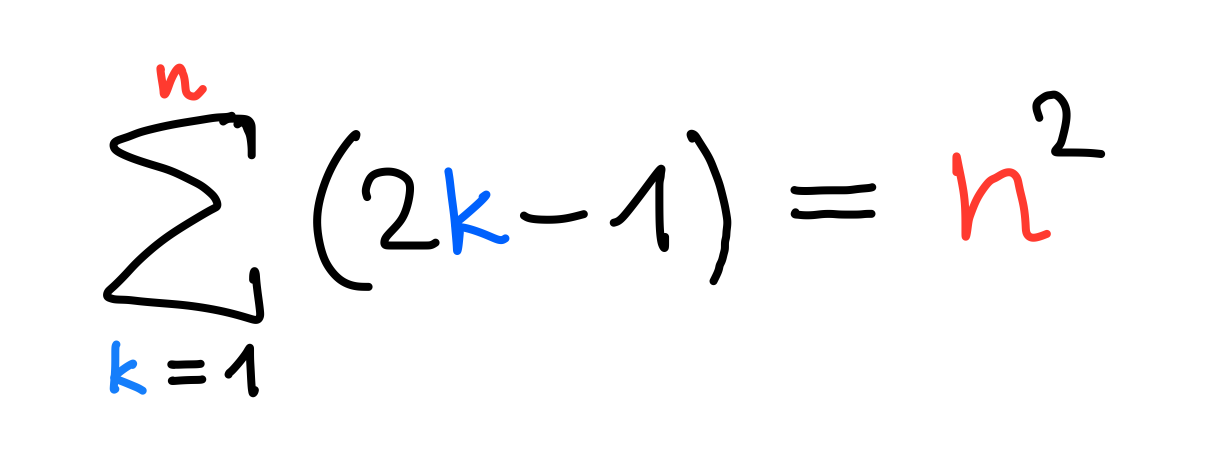
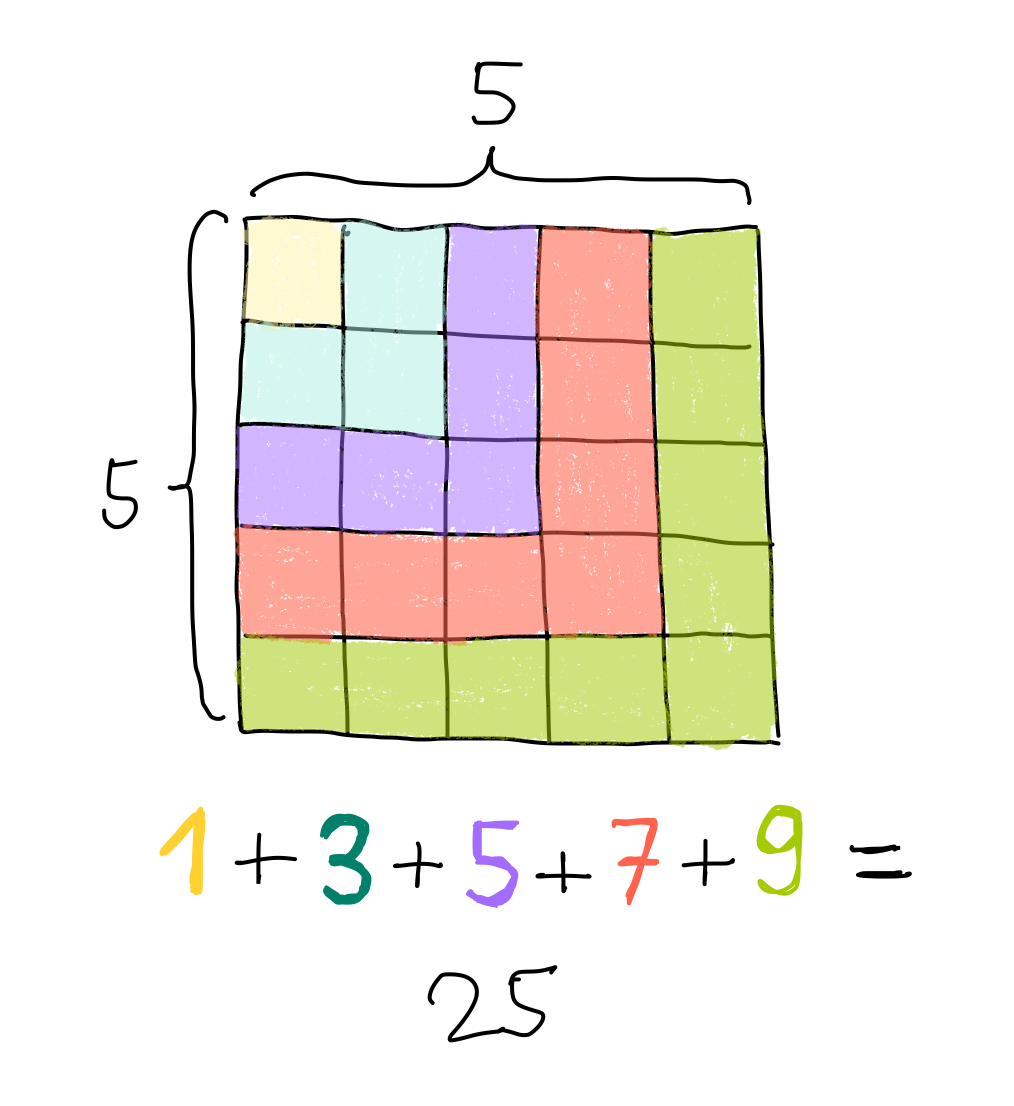
1+3+5+7+9+⋯+(2n-1)
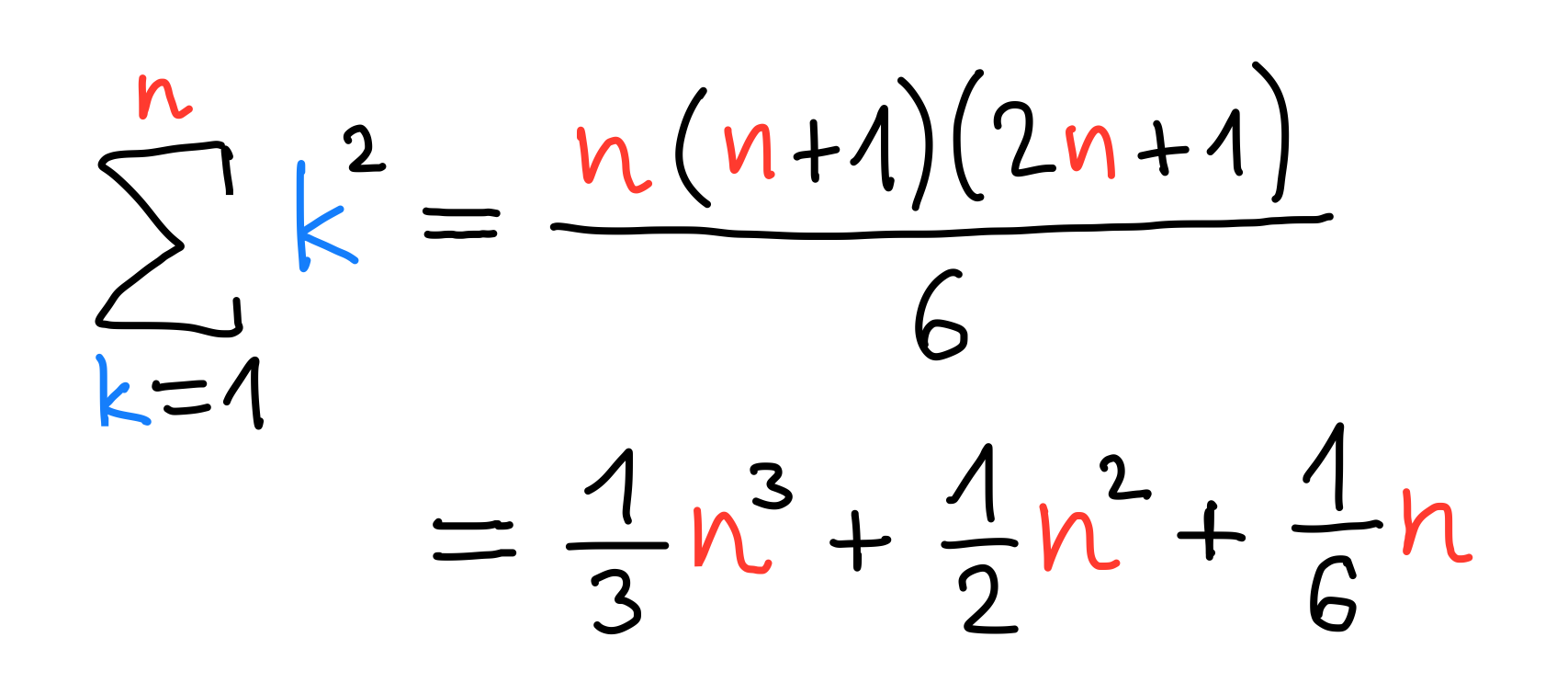
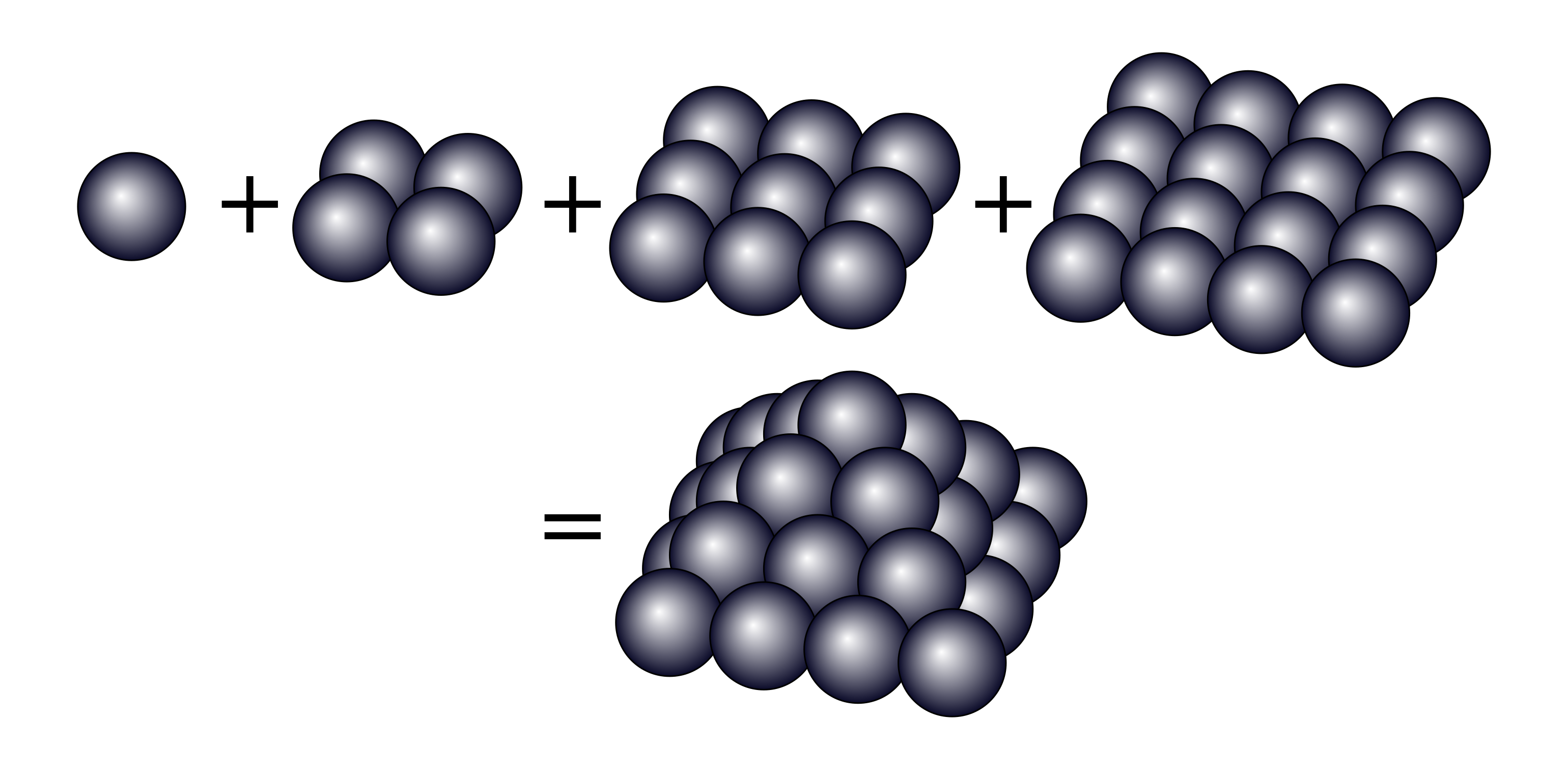
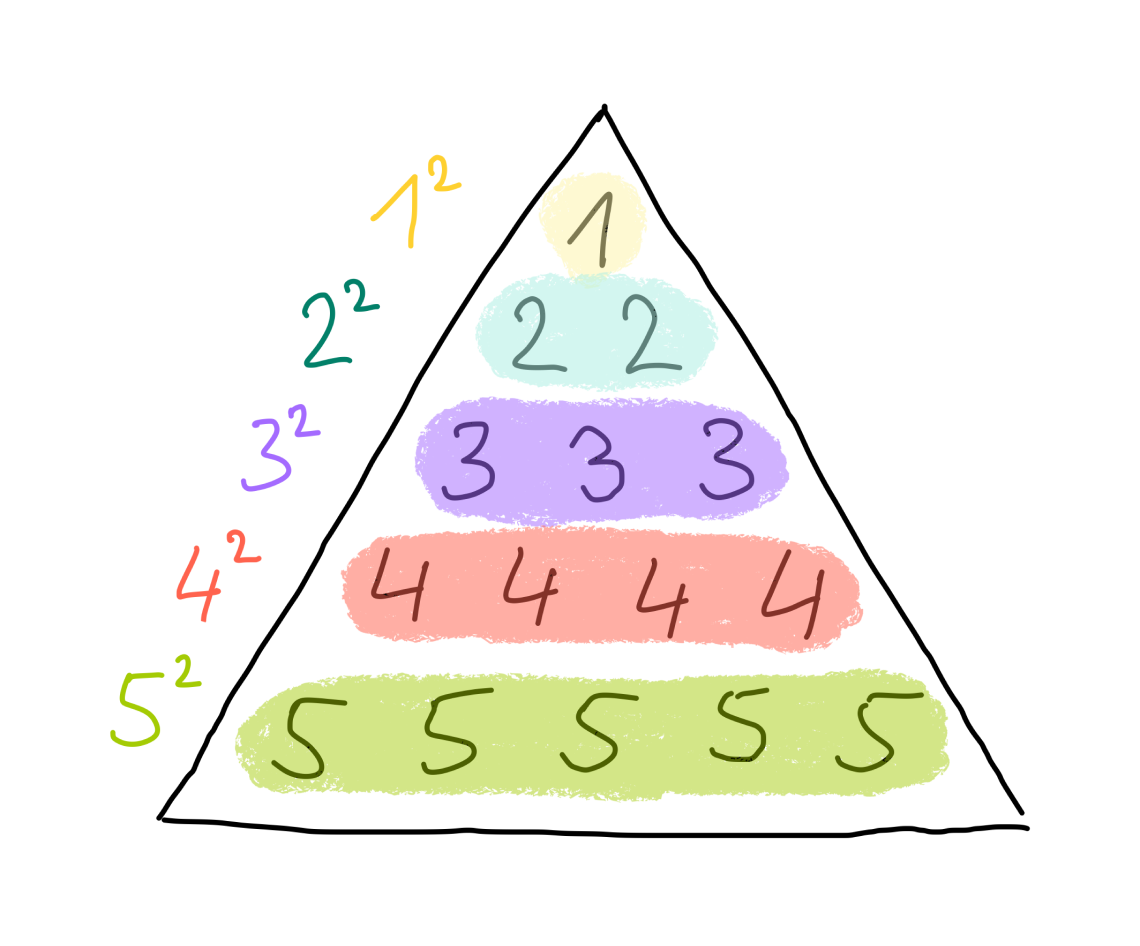
1²+2²+3²+4²+⋯+n²
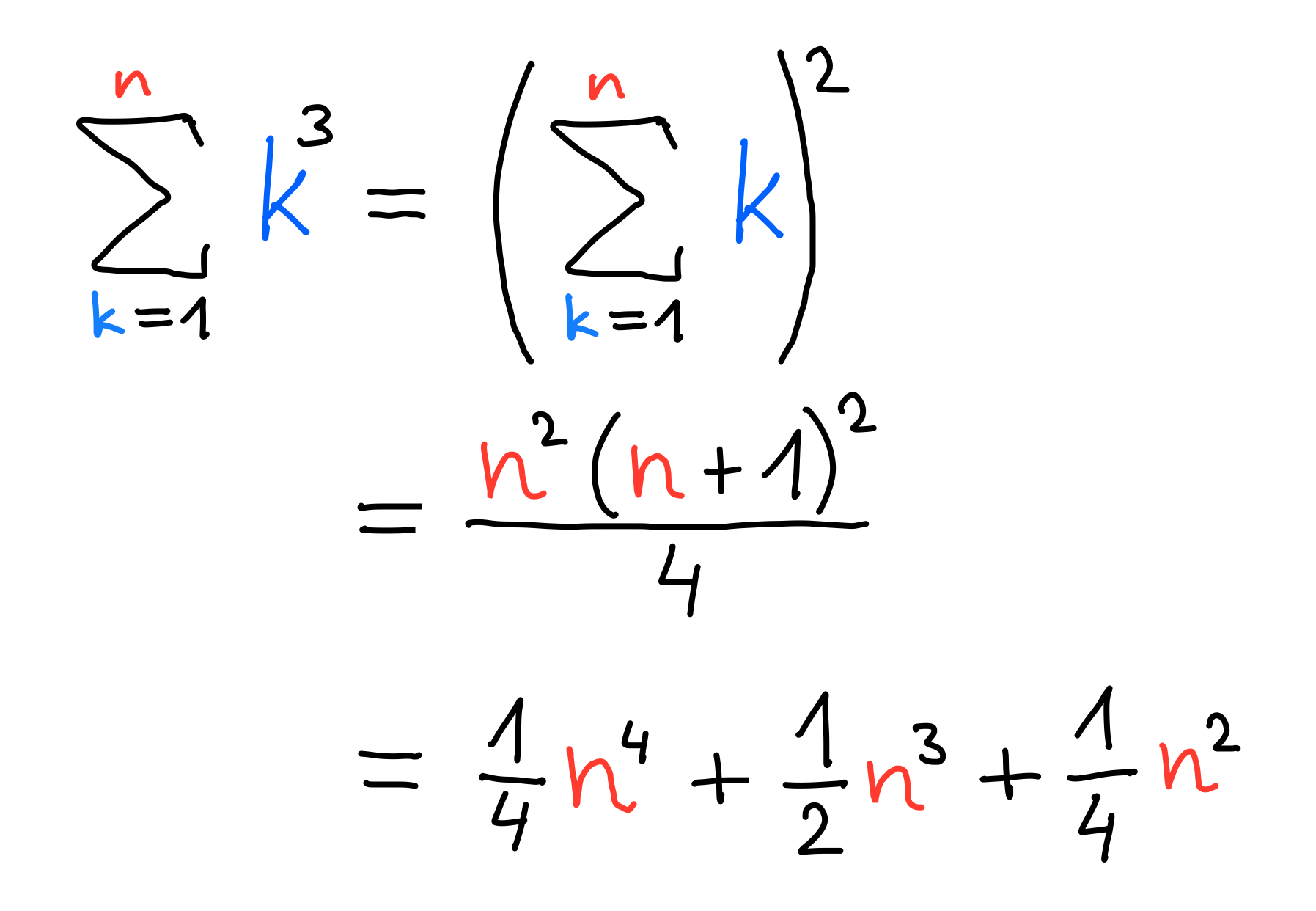
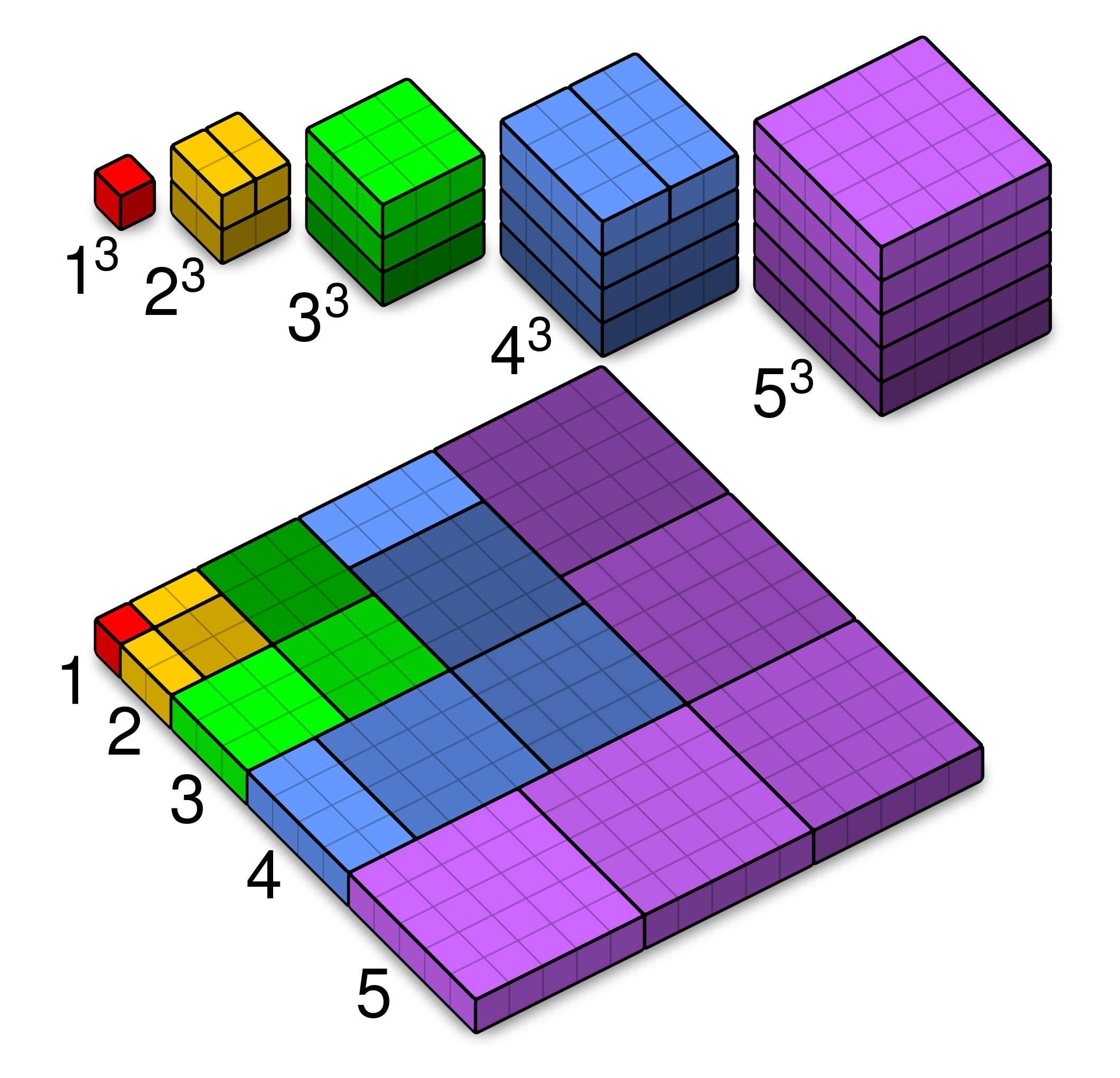
1³+2³+3³+4³+⋯+n³
Pascal triangle 1 1 1 1 2 1 1 3 3 1 1 4 6 4 1 1 5 10
10 5 1 1 6 15 20 15 6 1 Picture proof
Picture proof
Pyramidal numbers
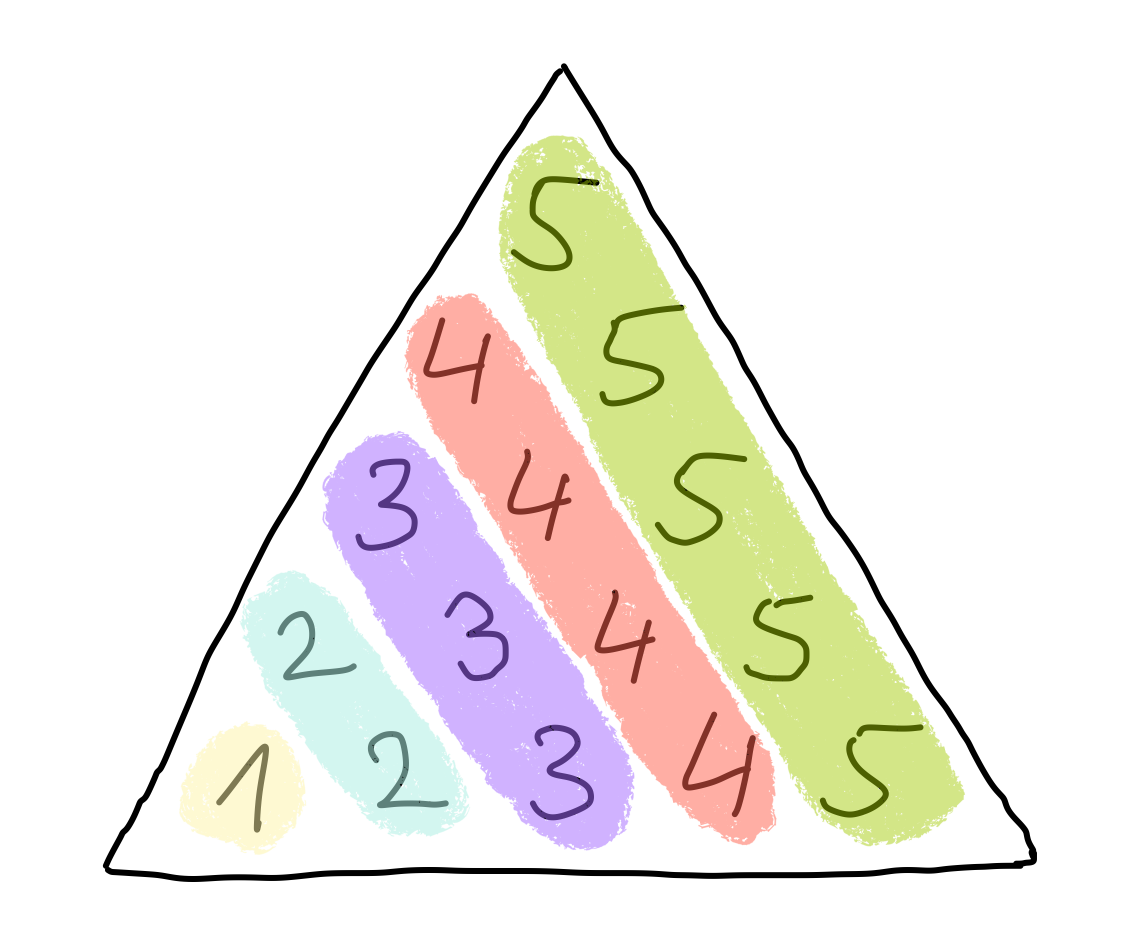
Place numbers into a triangle
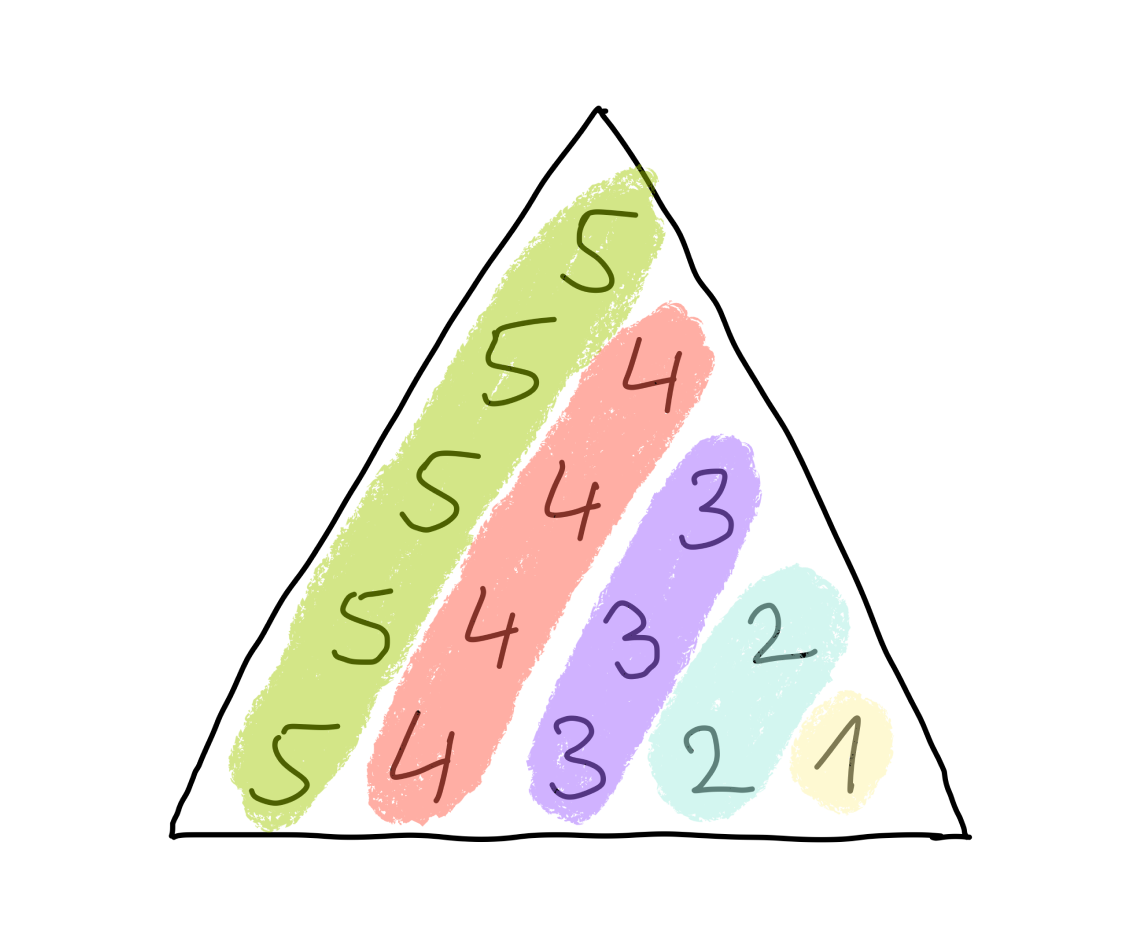
Rotated 120 degrees
Rotated -120 degrees
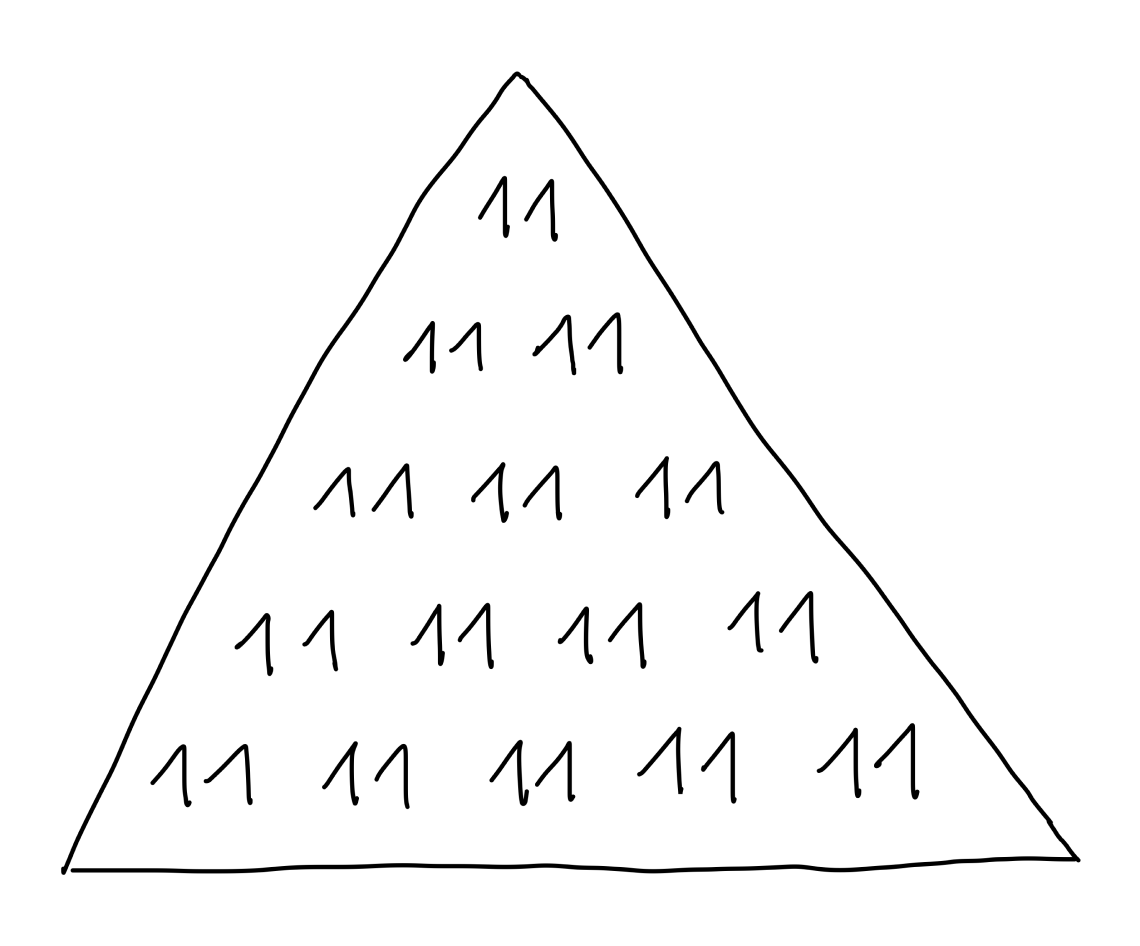
Adding all together
Picture proof
Summing multiplication table by columns
Summing multiplication table by L shapes
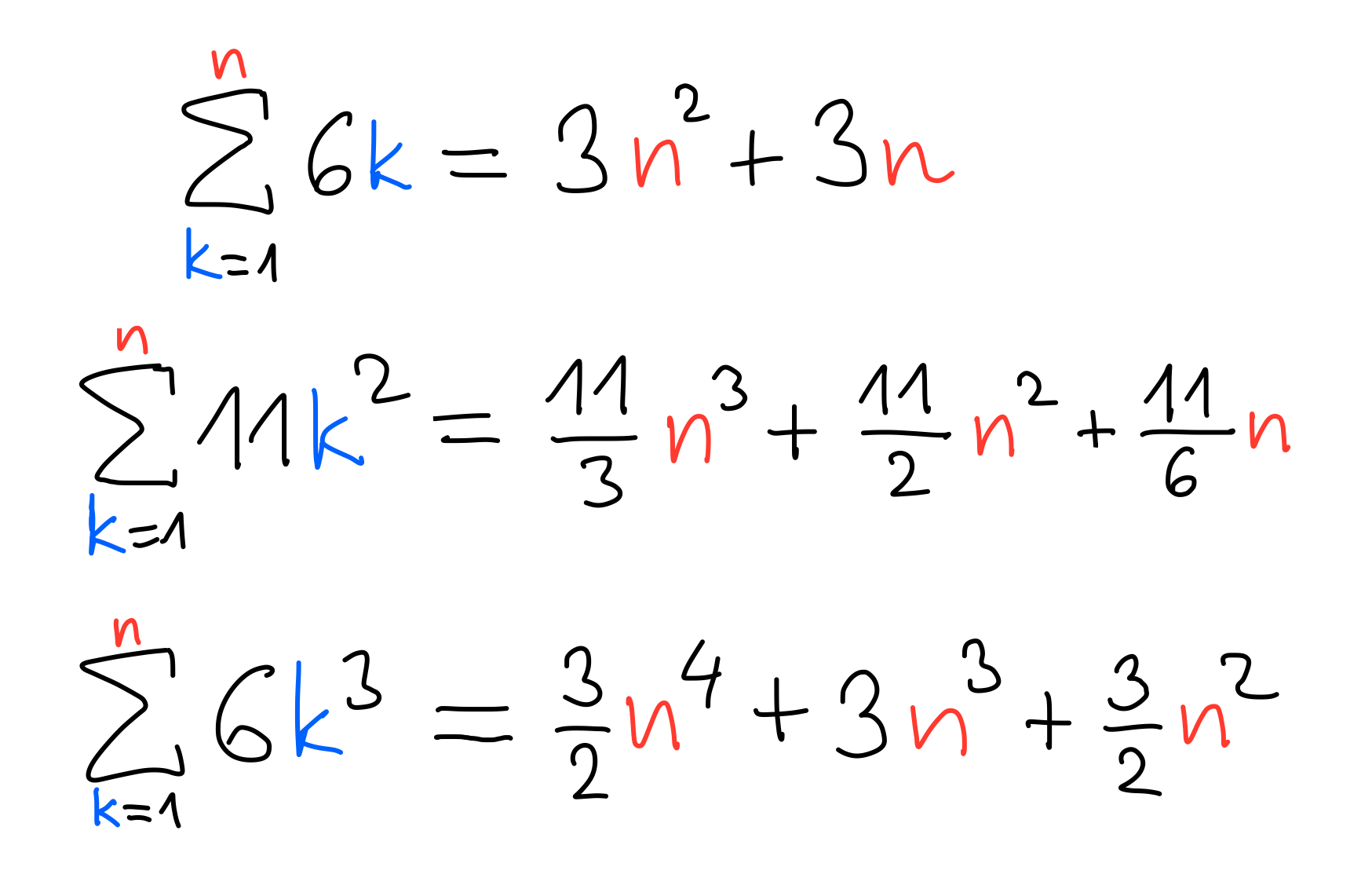
What is the pattern?
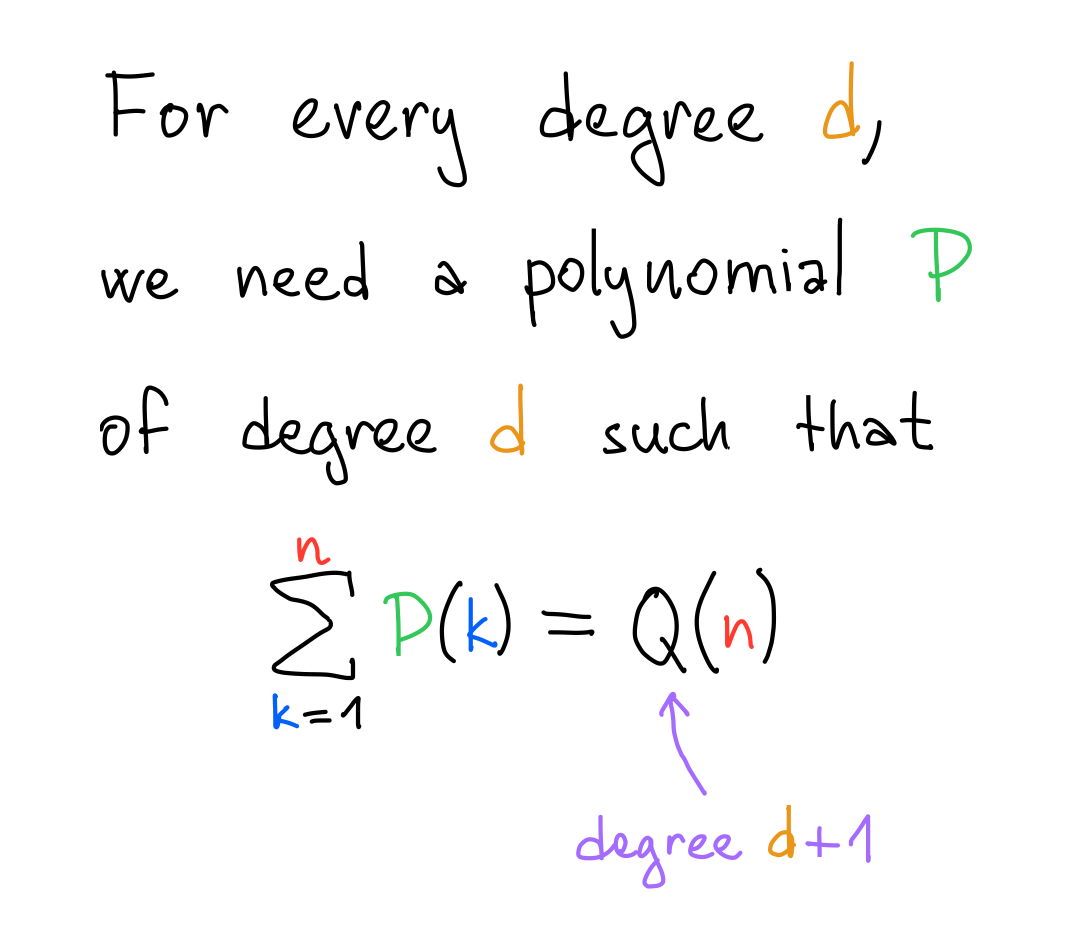
General statement
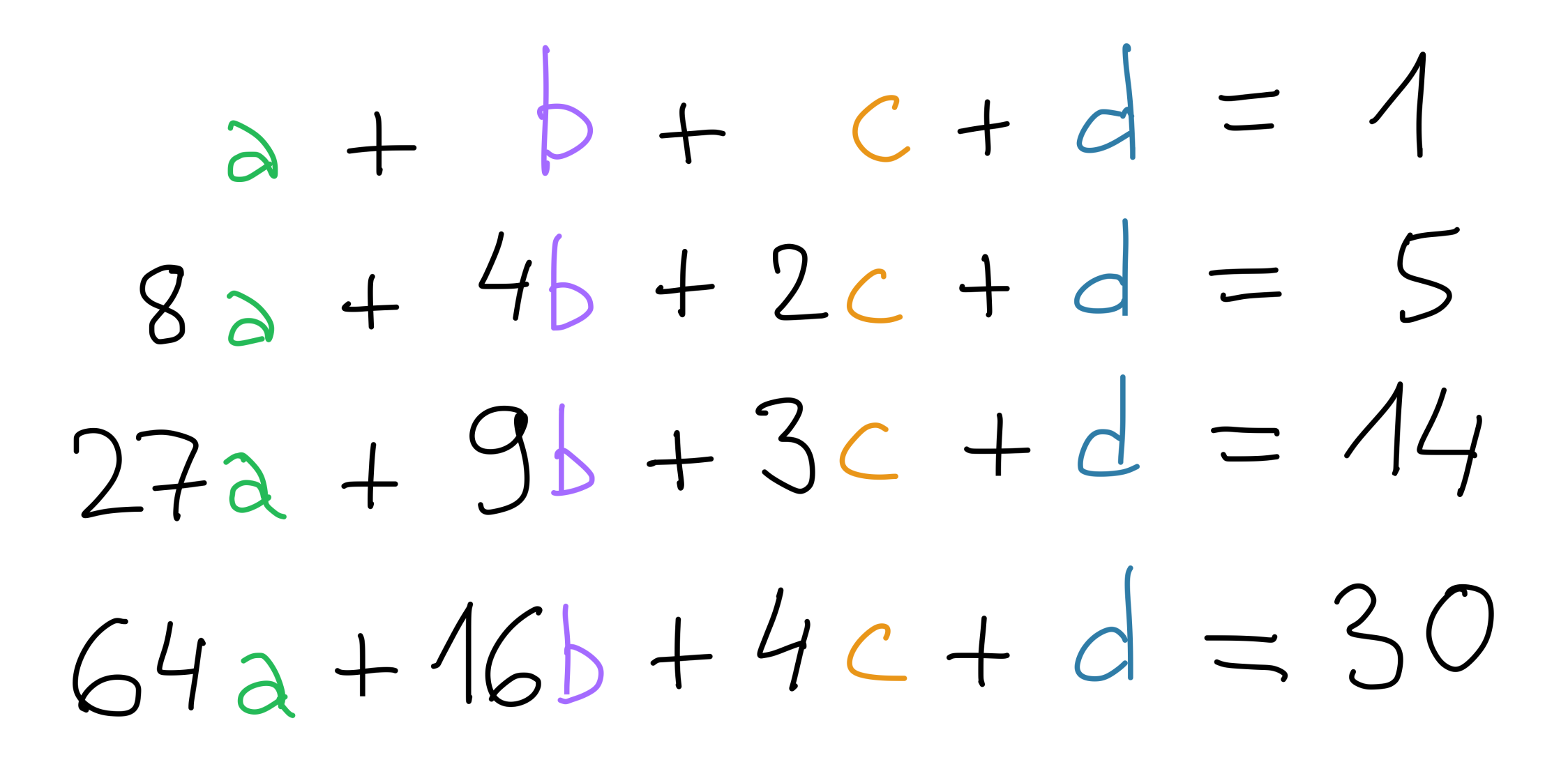
Computing coefficients of Q
System of linear equations
Gauss-Jordan elimination
1) Only needed for some polynomials P
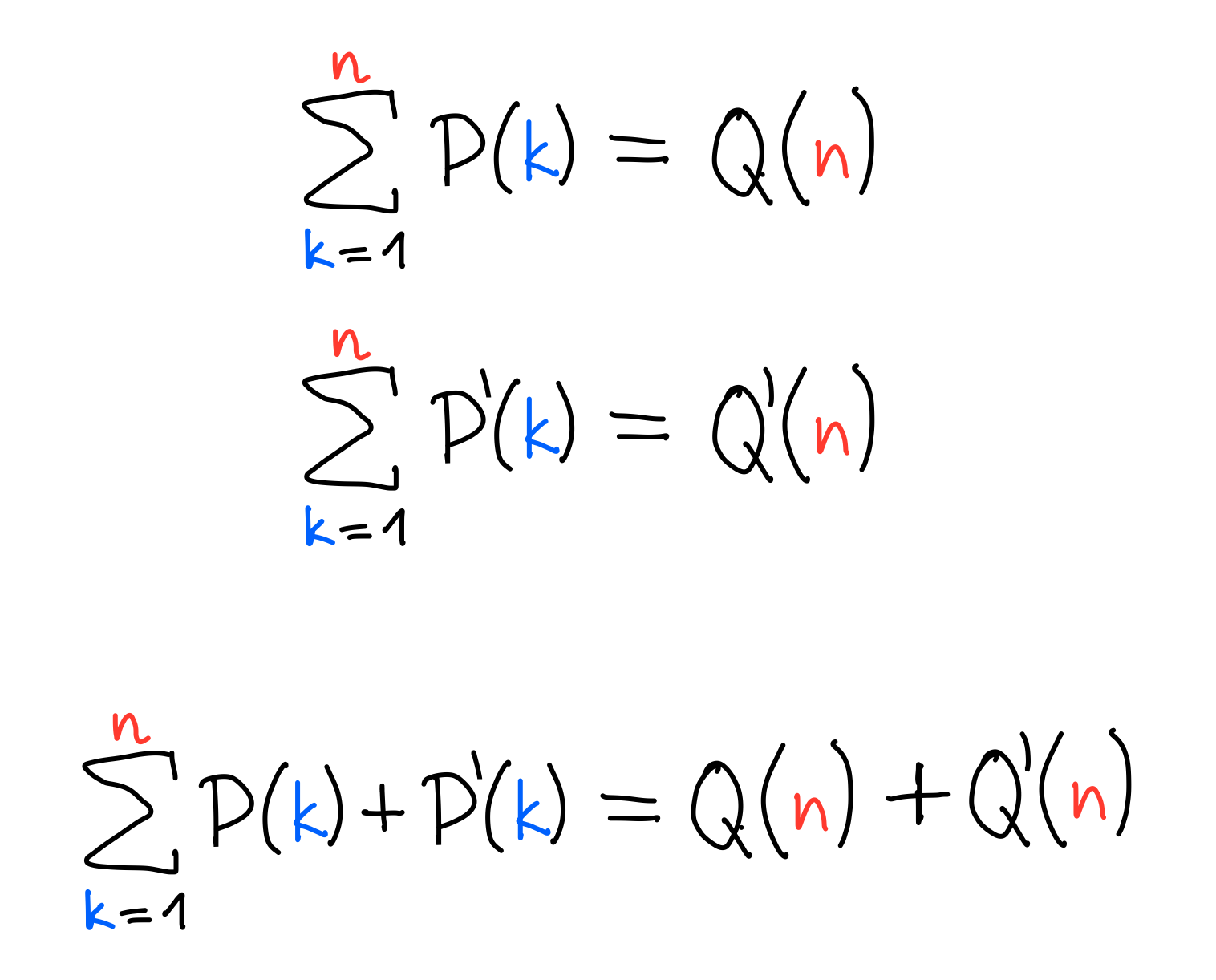
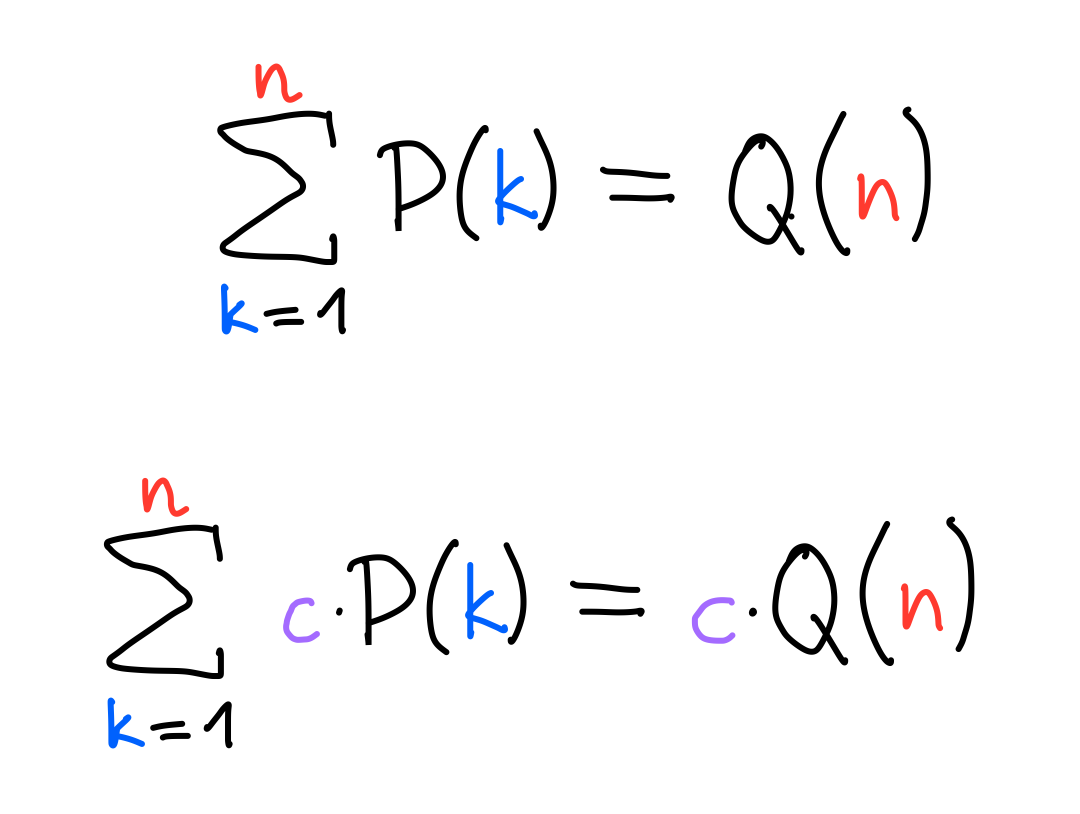
2) Prove it for these polynomials P Linearity for adding
Linearity for multiplying
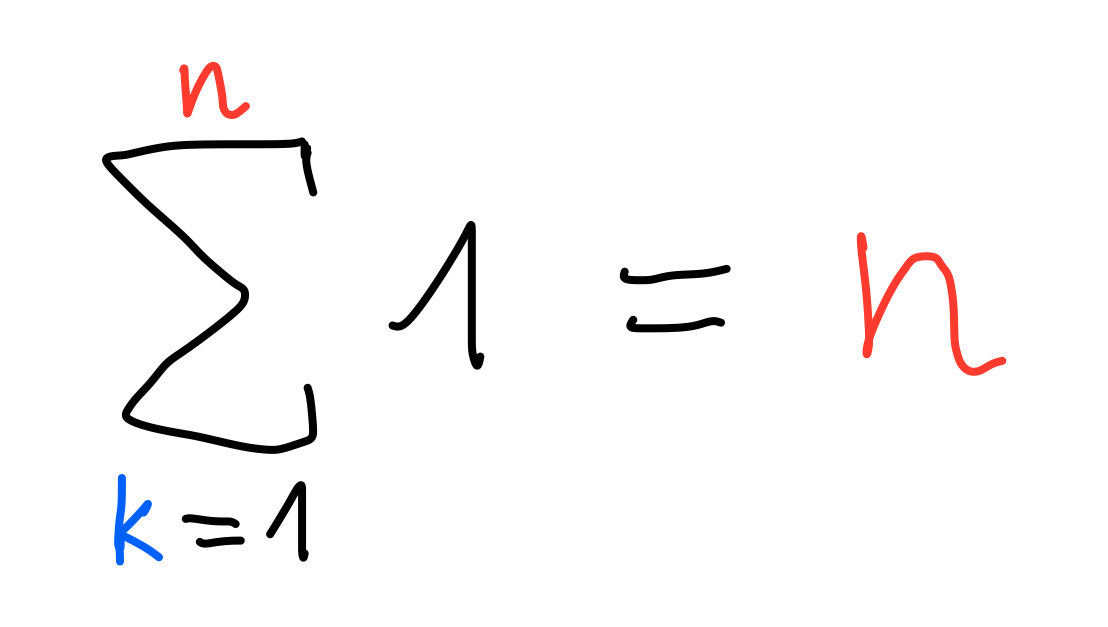
Combining sum of odd numbers
1+1+1+⋯+1=n
All degree 3 polynomials done
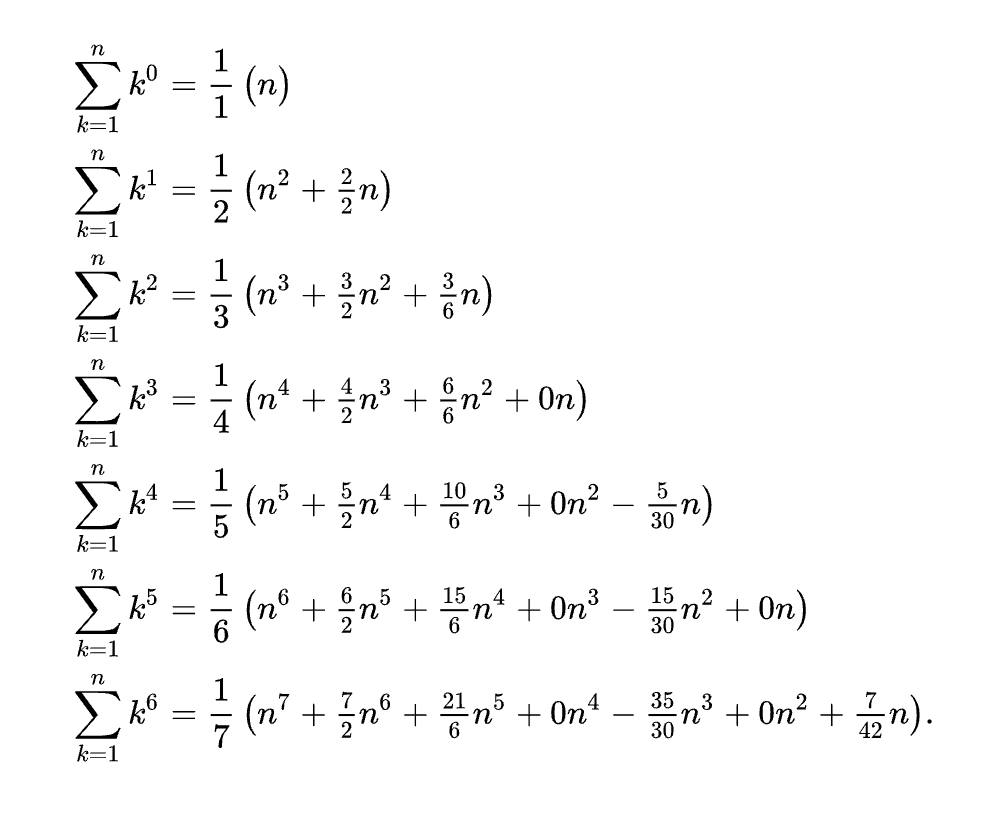
Sums of powers (Faulhaber's formula)
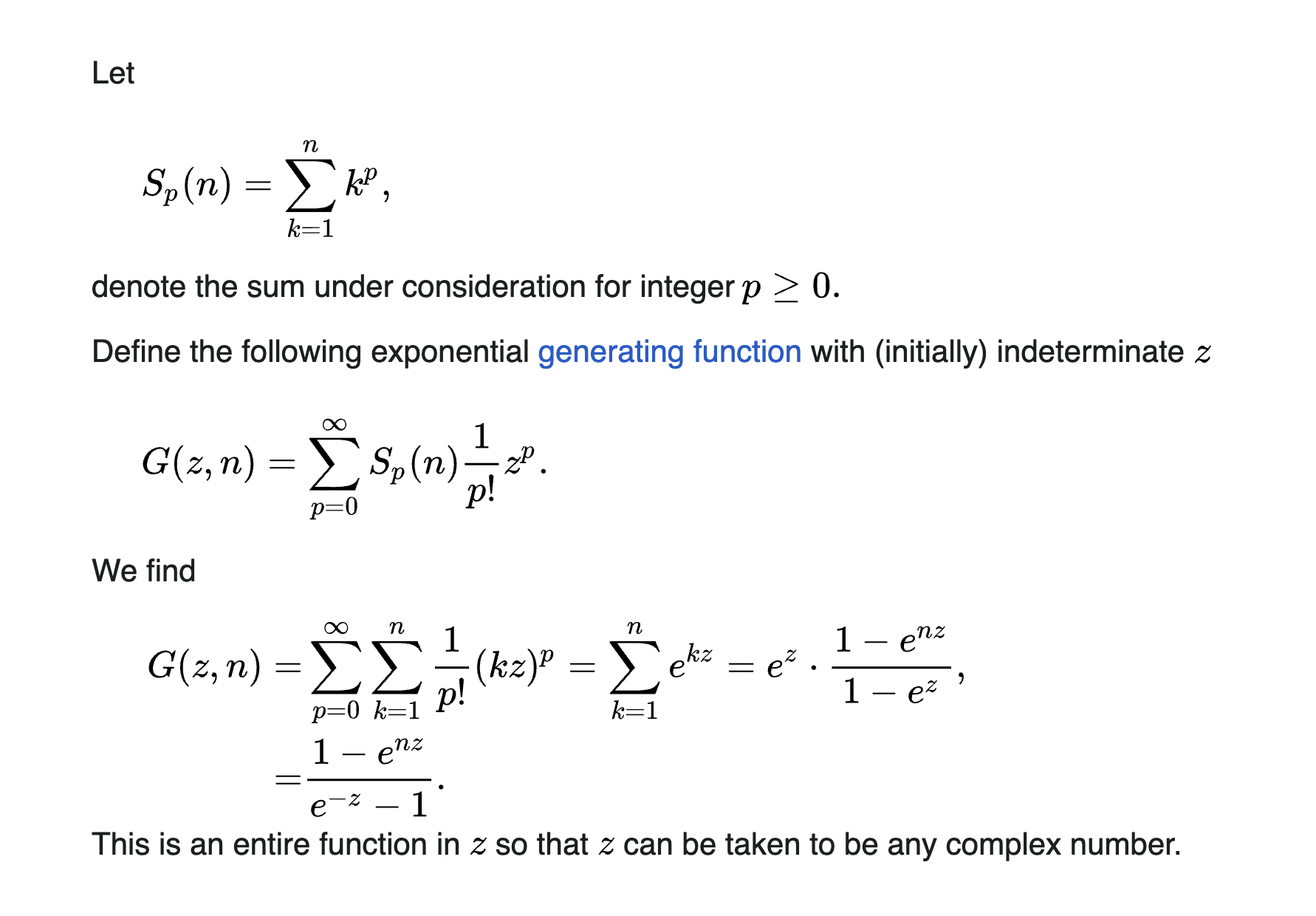
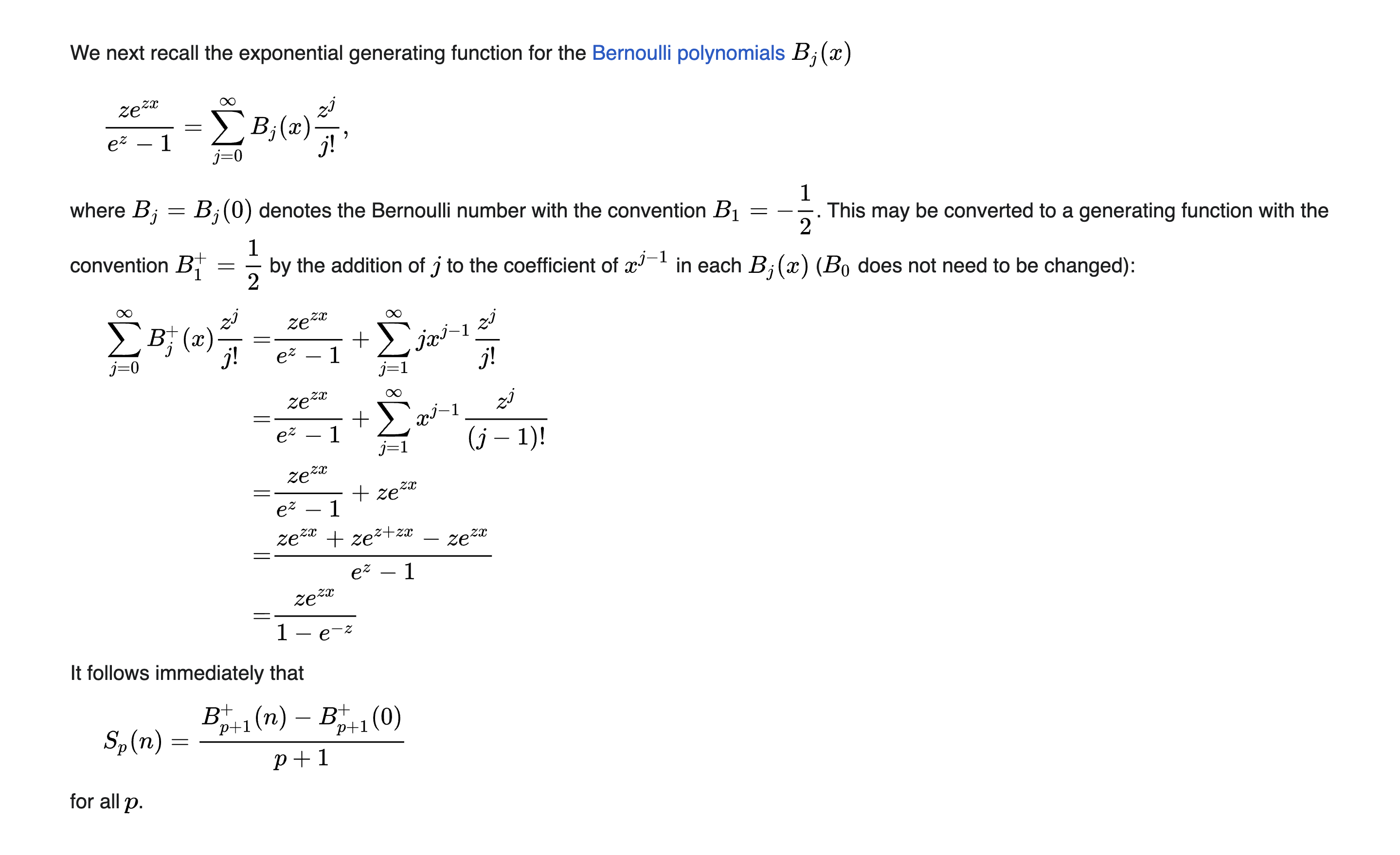
Standard proof using generating functions
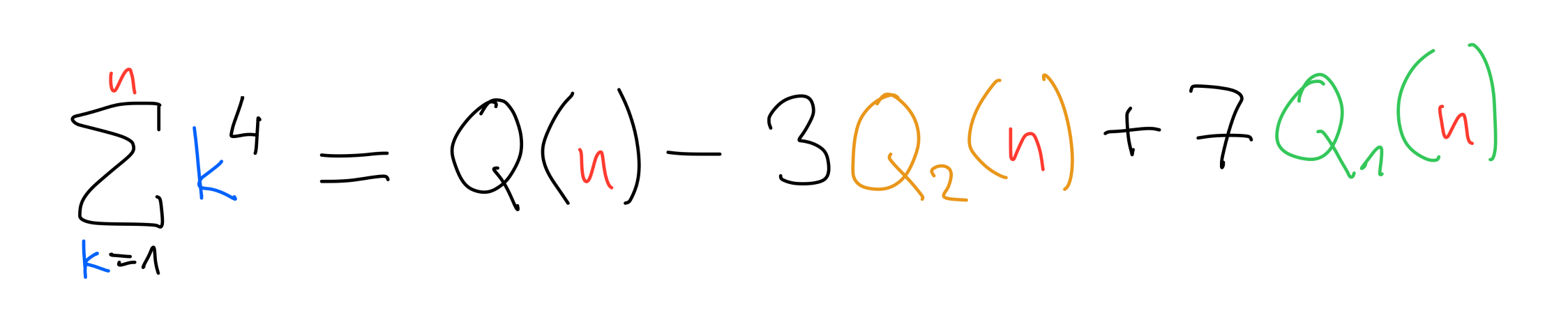
Any degree 4 polynomial helps
Implies 1⁴+2⁴+3⁴+⋯+n⁴
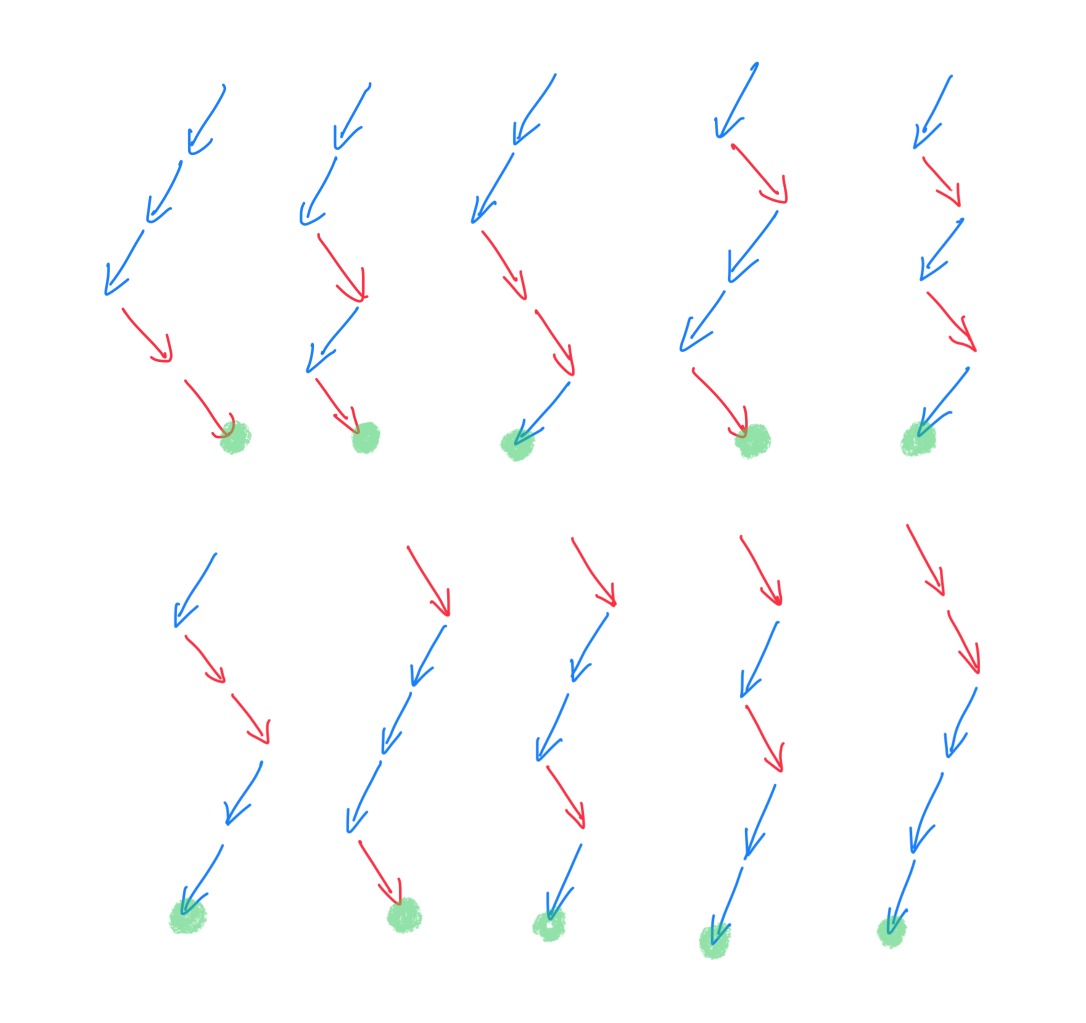
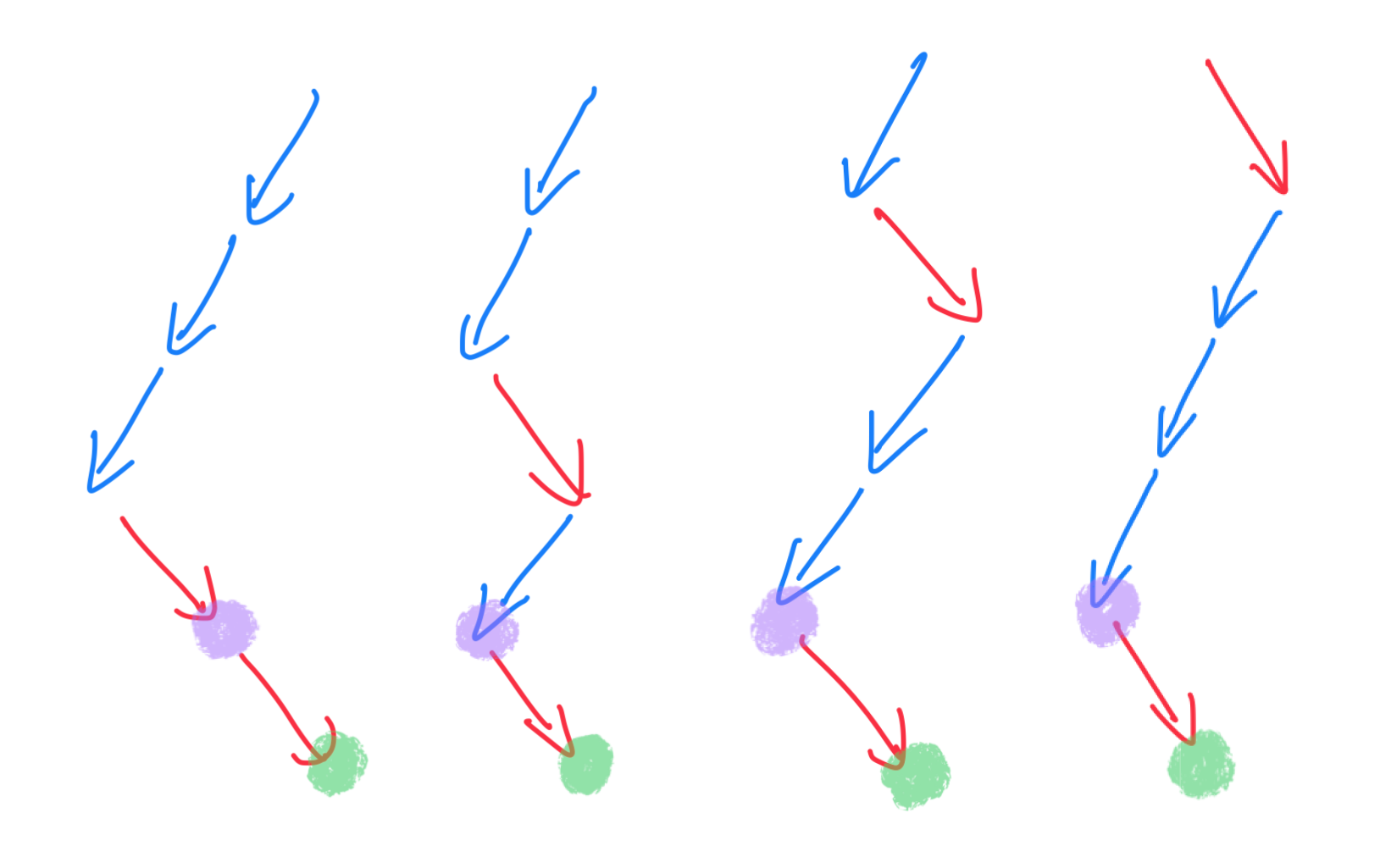
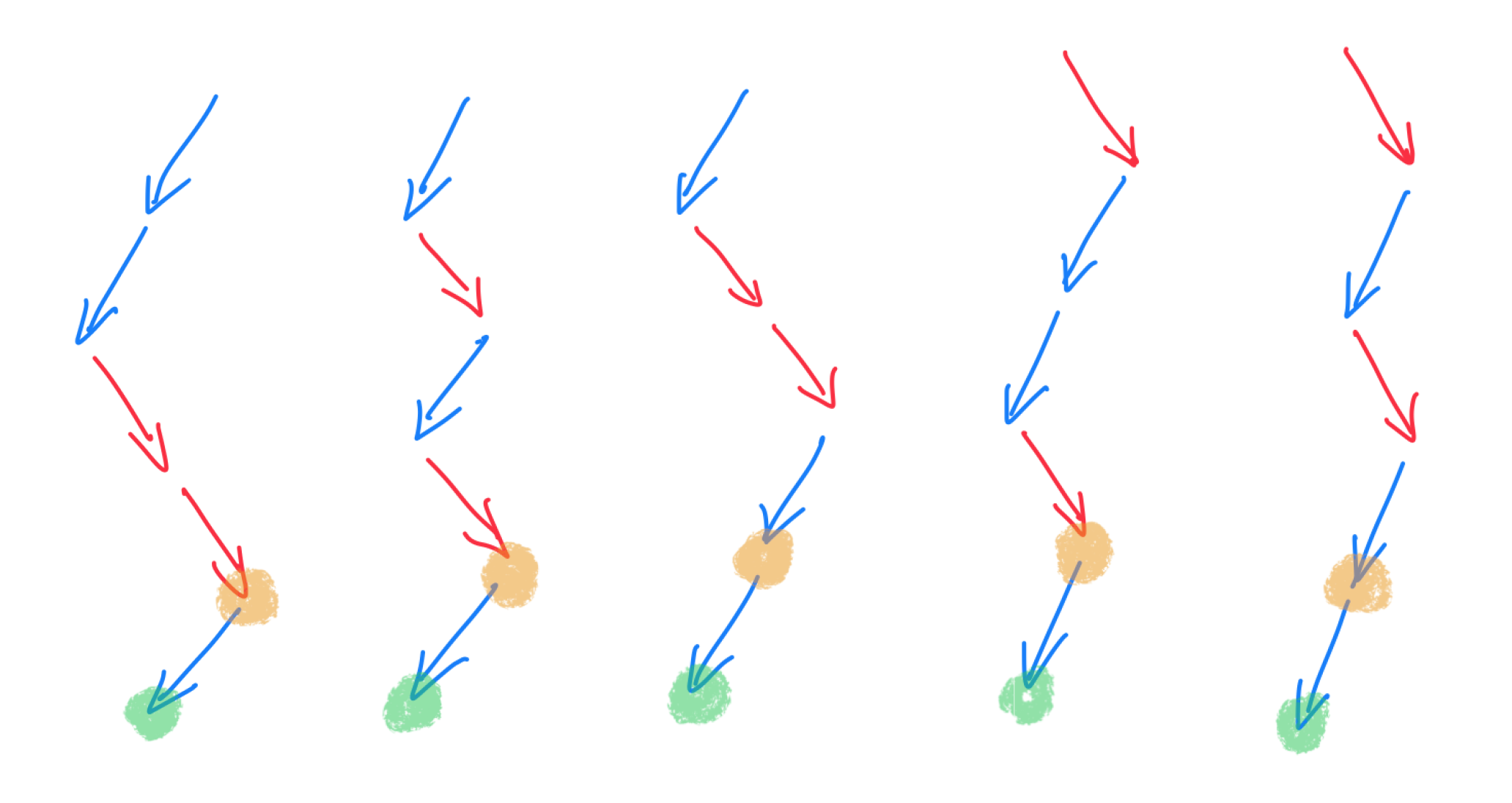
Number of paths
All 10 paths
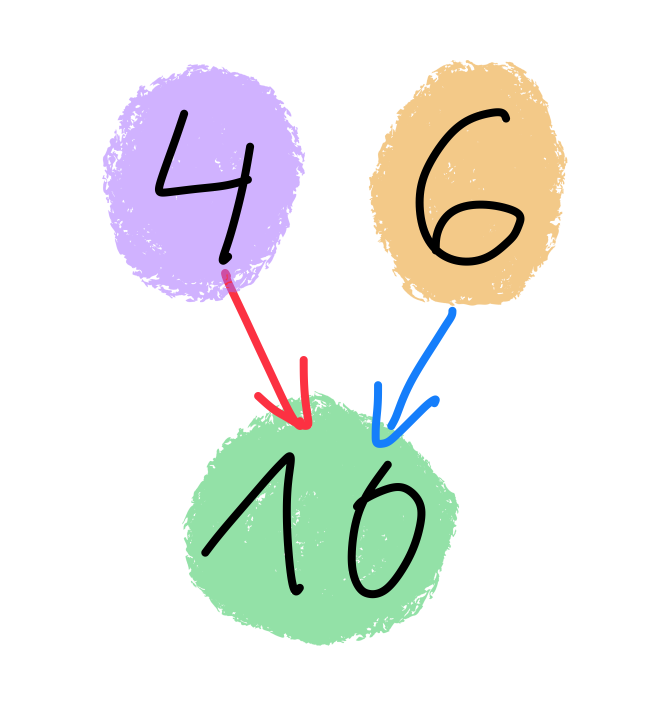
Addition of paths
Extended paths with a right step
Extended paths with a left step
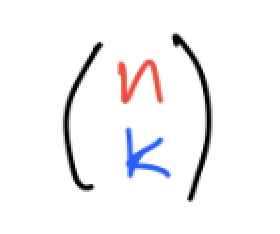
k=0 n=0 k=1 n=1 k=2 n=2 k=3 n=3 k=4 n=4 k=5 n=5 k=6 n=6 n choose k
Computing directly
General formula
Patterns within Pascal triangle Vertical symmetry
Sum of a row
Sum of odd/even indexes in a row
Sum of squares of a row
Fibonacci numbers
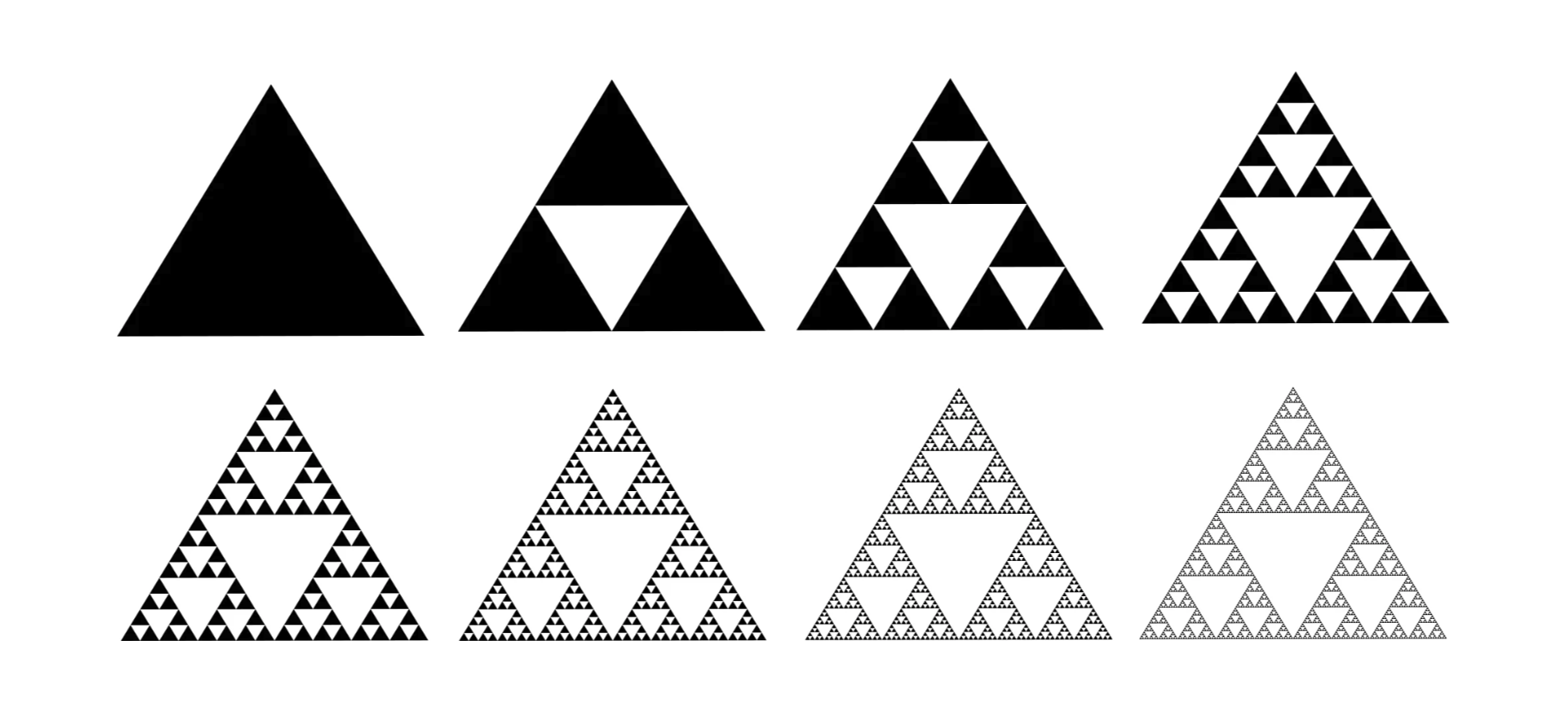
Highlighting all odd numbers
Serpinski triangle
What about the hockey stick?
Hockey stick identity
Hockey stick identity for d=4
Deriving formula for 1⁴+2⁴+3⁴+⋯+n⁴
Previously known sums
OrgPad
20% off POLYNOMIALS